PMES Base Build
4 Min Read
02 July 2026Designing for Performance: How the Workplace Shapes the Way We Work
Share
Table of Contents+
Introduction
When organisations talk about productivity, the conversation often revolves around technology, talent and processes. Yet one critical factor is frequently overlooked, the workplace itself.
A well-designed office cannot create motivation, but it can remove the everyday friction that prevents people from doing their best work. From Desk fatigue and sedentary boredom to inadequate collaboration spaces, the physical environment has a direct impact on how effectively people think, create and perform.
Today, workplace design is no longer just about accommodating employees. It is about enabling them.
The Workplace as a Productivity Driver
Recent workplace studies indicate that employees who have greater flexibility in choosing where and how they work are significantly more likely to feel productive and engaged. This highlights an important shift in how organisations view office spaces.
The workplace is no longer a passive backdrop to work. It has become an active contributor to employee performance, well-being and collaboration.
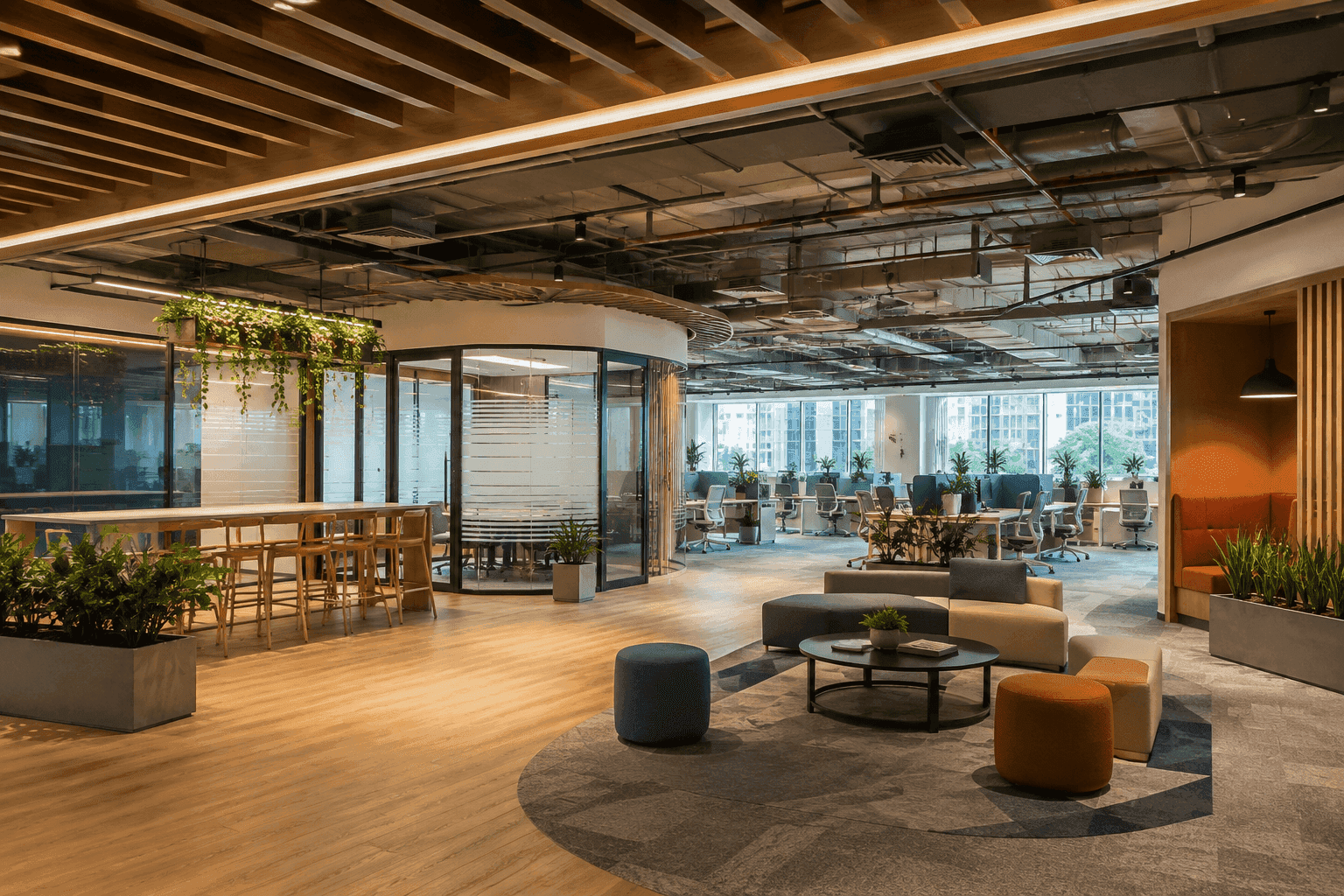
As organisations adapt to changing work patterns, the focus is moving from occupancy-driven design to intent-driven design, creating environments that support different ways of working rather than expecting a single space to meet all workplace needs like team work, collaboration, focus zone and a place to unwind.
Why One Size No Longer Fits All
Productivity is not a constant state.
Some tasks require deep concentration and uninterrupted focus, while others thrive on discussion, brainstorming, and teamwork. Expecting employees to perform all these activities within the same environment can limit effectiveness.
The most successful workplaces recognise this reality by offering a variety of settings tailored to different work modes. Instead of rows of identical desks, modern offices are evolving into ecosystems of spaces designed around purpose.
Three Workplace Shifts Defining High-Performance Offices
1. Focus Has Become Essential Infrastructure
As work becomes increasingly knowledge-driven, the ability to concentrate without interruption has become one of the most valuable workplace assets.
Quiet rooms, focus pods, enclosed booths and low-distraction zones are no longer considered workplace perks. They are becoming essential tools that help employees tackle complex tasks, solve problems and make informed decisions.
Organisations that prioritise spaces for focused work are investing directly in productivity.
2. Collaboration Spaces Are Becoming Innovation Spaces
Innovation rarely happens on schedule.
Some of the most valuable ideas emerge through spontaneous interactions, whether it's a quick conversation between colleagues, a brainstorming session near a project room, or an impromptu discussion around a whiteboard.
Modern workplace design is increasingly focused on supporting different forms of collaboration, from informal one-on-one conversations to structured workshops and team co-creation sessions. Providing the right environment for these interactions can significantly improve creativity and problem-solving.
3. Choice Is Replacing Standardisation
Employees today expect flexibility, not only in how they work but also in where they work.
Workplaces redesigned in recent years are offering more options, including better air quality, flexible furniture, social spaces, focus areas, and collaborative zones. This variety allows individuals to choose environments that best suit the task at hand.
When employees can align their workspace with their work style, engagement and productivity naturally improve.
What Workplace Design Means in the Age of AI
As artificial intelligence automates routine and repetitive tasks, the value of human contribution is shifting towards creativity, critical thinking, judgment and meaningful collaboration.
This evolution is redefining the role of the office.
Rather than serving as a place where employees simply show up, the workplace is becoming a destination that supports innovation, learning, connection and well-being. In an AI-enabled future, human-centric spaces will become corner stones of workplace environment because they foster the capabilities that technology cannot easily replicate.
The Future of Workplace Performance
The office of the future may not look dramatically different, but it will function differently.
Successful workplaces will be those that intentionally support focus, collaboration, flexibility and employee well-being. They will remove barriers, reduce friction and create environments where people can consistently perform at their best and over all reduce attrition in large organisations.
While workplace design alone cannot guarantee productivity, it can create the conditions that make high performance possible. And as organisations continue to evolve, that may prove to be one of the most valuable investments they can make.