PMES Corporate Fitout
5 Min Read
17 August 2026Mumbai’s Workplace Market: Evolving Occupier Expectations and the PMC Imperative
Share
Table of Contents+

Introduction
As Mumbai’s occupiers move beyond simply acquiring office space to actively shaping workplace experiences, Project Management Consultants are emerging as strategic partners in translating business objectives into high-performing, future-ready workplaces.
Mumbai’s office market is undergoing a significant transformation. The conversation around commercial real estate is no longer limited to location, area and rental costs. Increasingly, occupiers are asking a more fundamental question: What kind of workplace will best support our people, business objectives and future growth?
This shift is changing the way organisations approach workplace strategy, design and delivery. Premium Grade A assets, flexible workplace models, employee experience, sustainability and technology-enabled environments are becoming increasingly important considerations in occupier decision-making.
At the heart of this evolution is a clear flight to quality. Organisations are looking at their workplaces not merely as physical infrastructure, but as an important enabler of talent attraction, collaboration, productivity and long-term business performance.
From Office Space to Workplace Experience
The modern workplace is expected to do much more than provide employees with a desk.
As hybrid working models and evolving employee expectations reshape the office environment, occupiers are increasingly seeking spaces that encourage collaboration, support wellbeing and create a stronger connection between employees and the organisation.
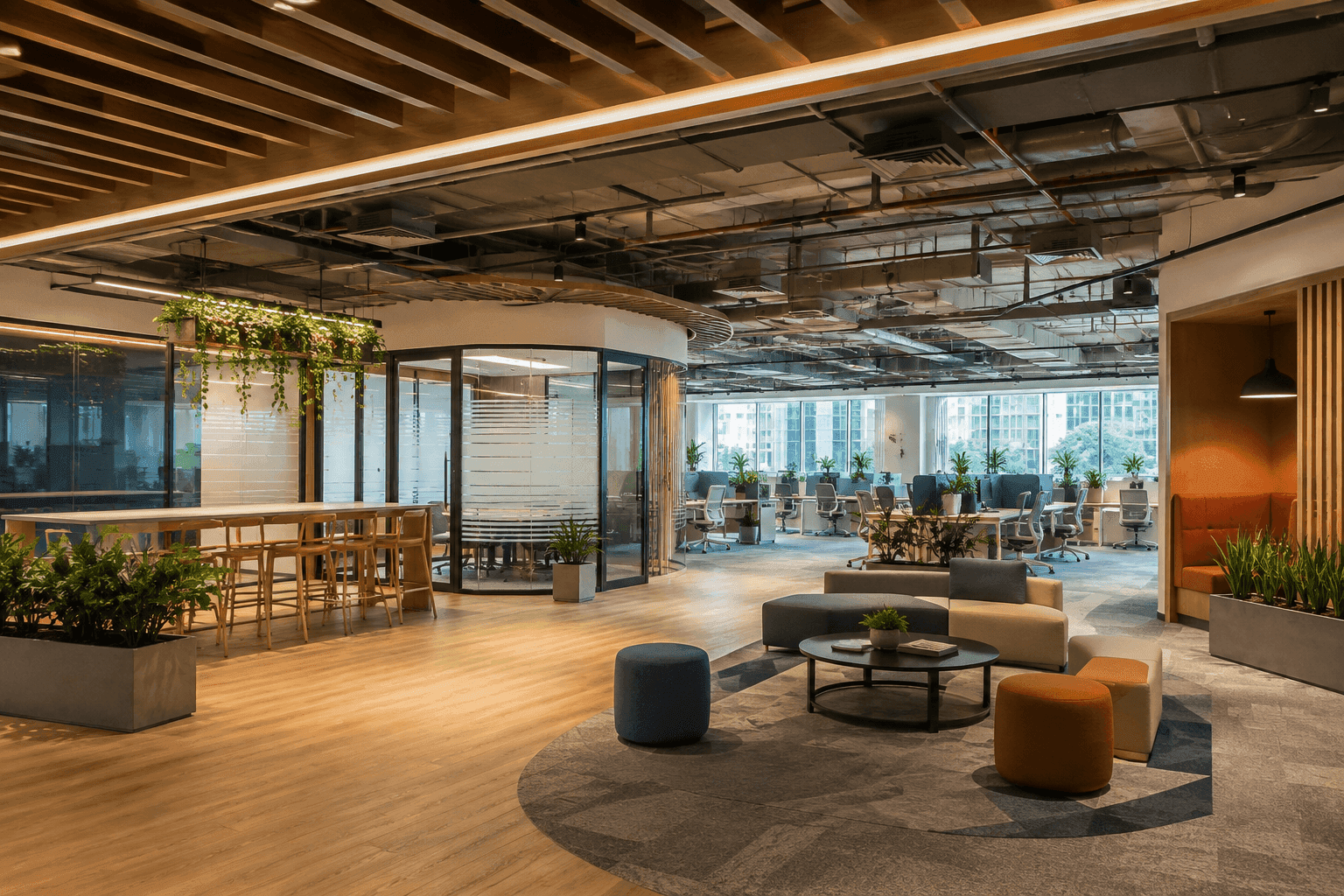
This has led to a growing focus on employee-centric workplace design. Collaborative areas, wellness features, hospitality-inspired environments and thoughtfully planned common spaces are becoming important components of the workplace experience.
The objective is clear: to make the workplace a destination that people want to engage with, rather than simply a place they are required to be.
Five Priorities Shaping the Next Generation of Workplaces
1.Employee-Centric Design
Workplaces are increasingly being designed around the needs of employees. Collaborative spaces, wellness-led features and hospitality-inspired environments are helping organisations create workplaces that support engagement, interaction and a stronger employee experience.
2.Flexibility and Adaptability
With business requirements and working models continuing to evolve, occupiers need workplaces that can adapt with them. Flexible layouts and scalable planning allow organisations to respond to changing workforce requirements without having to rethink their entire workplace strategy.
3.Sustainability and ESG
Sustainability is moving beyond an aspiration to becoming an increasingly important part of workplace planning and execution. Occupiers are looking towards green-certified and energy-efficient workplaces that can support their broader ESG commitments.
4.Technology Integration
Technology is becoming embedded in the workplace experience. From seamless collaboration and workplace analytics to smart building solutions and operational efficiencies, technology needs to be considered throughout the workplace lifecycle — from planning and design to execution and commissioning.
5.Scalability and Business Resilience
For fast-growing organisations, particularly BFSI firms, Global Capability Centres (GCCs) and other high-growth businesses, the ability to scale is critical. Workplace strategies need to accommodate growth while maintaining operational efficiency and business continuity.
Why the Role of PMCs Is Becoming More Strategic
As workplace expectations become more complex, successful project delivery requires more than managing timelines and budgets.
Project Management Consultants (PMCs) are increasingly positioned at the intersection of strategy, design and execution. Their role is to ensure that the organisation's workplace vision is translated effectively into a deliverable, measurable outcome.
This requires PMCs to work closely with corporate leadership, workplace teams, designers, contractors, technology partners and other stakeholders — bringing these multiple workstreams together while maintaining control over cost, schedule, quality and risk.
The PMC's role increasingly involves:
- Aligning workplace strategy with business and workforce objectives
- Coordinating multiple stakeholders across corporate, design and delivery teams
- Managing cost, timelines, quality and project risks
- Embedding sustainability and ESG objectives into project execution
- Integrating workplace technology and smart building solutions from planning through commissioning
- Ensuring that the completed workplace delivers the intended employee experience and operational performance
The Bigger Picture: From Project Delivery to Business Value
The definition of a successful workplace project is changing.
Earlier, success could largely be measured by whether a project was delivered on time, within budget and to the required specifications. While these fundamentals remain critical, today's occupiers expect much more.
A successful workplace must be agile, sustainable, technology-enabled and people-focused. More importantly, it needs to support the organisation's broader business and workforce objectives.
This is where the strategic value of a PMC becomes increasingly relevant. By connecting workplace strategy with design, technology, sustainability and execution, PMCs can help occupiers move from simply delivering a workplace to creating an environment that generates measurable business value.
The Road Ahead
Mumbai's workplace market is entering a phase where quality of experience will be as important as quality of space.
As occupiers continue to rethink how their workplaces support people, productivity and business growth, the complexity of workplace projects will only increase. Organisations that approach these projects through an integrated strategy — bringing together business objectives, workplace planning, design, technology and execution — will be better positioned to create workplaces that remain relevant as their needs evolve.
For PMCs, this represents a fundamental shift in their role: from project managers to strategic partners who help organisations turn evolving workplace expectations into measurable business outcomes.